
Video tutorials -
Filters:
Completing the motor circuit - pert 5
Don’t worry about which electrical contact you connect to the positive or negative output terminals of the speed controller. The cables can always be swapped later.
- #2527
- 07 Nov 2025
Completing the motor circuit - pert 4
Do not solder anything to the speed controller.
- #2526
- 07 Nov 2025
How to fix the circuit components in place - part 4
If you screw the bolts too far into the motor, it may stop working. This won’t be an issue later, but if it causes problems now, place a few nuts on the bolt before using it. This will stop the bolt from going too deep into the motor.
- #2522
- 07 Nov 2025
How to fix the circuit components in place - part 2
The dip switch is mounted by using the holes that are already placed on the PCB board.
- #2520
- 07 Nov 2025
Connecting the speed controller - part 5
If you’ve connected everything correctly, you can now turn on the motor and control its speed using the potentiometer.
The potentiometer is the small knob on the motor speed controller that you can rotate.
- #2518
- 07 Nov 2025
Connecting the simple circuit - part 1
It doesn’t matter if you connect the wire to the positive (cathode) or the negative (anode) terminal of the battery.
Note that for power sources, the cathode and anode are marked opposite to that of diodes and other electronics. In them, the cathode is the positive terminal and the anode is the negative one.
- #2511
- 07 Nov 2025
Tools shopping list
Here’s a list of all the tools you’ll need to build the DIY Rotating LED Clock Display. Each tool links to Amazon. If a link isn’t available, we’ve included tips on how to find another one.

- #2481
- 06 Nov 2025
Components shopping list
Here’s a list of all the parts you need to build the DIY Rotating LED Clock Display. Each part links to Amazon. If a link doesn’t work, don’t worry - we’ve also added tips on how to find a replacement.

- #2480
- 06 Nov 2025
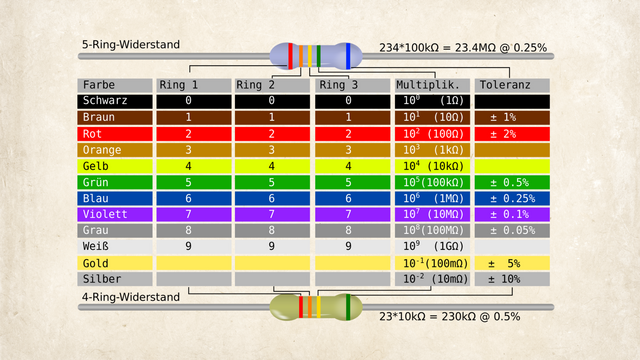
How to read resistor color codes
Resistors are essential electronic components that limit the flow of electric current in a circuit. Because they’re so small, their resistance value (measured in ohms, Ω) is usually marked with colored bands instead of numbers. Here's how to read them:
- #2510
- 23 Oct 2025
Hall Effect Sensor
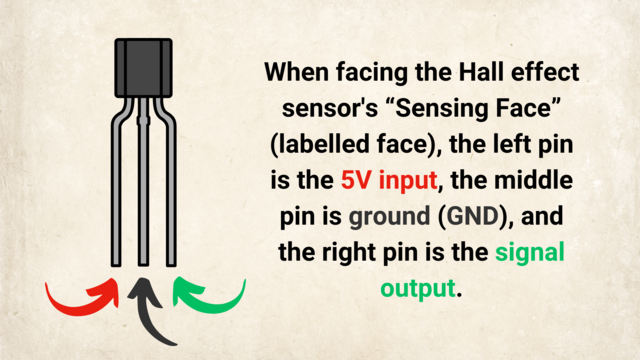
What Is a Hall Effect Sensor?
A Hall Effect Sensor is a small electronic component that detects magnets. When a magnet comes close, it sends a signal to other devices, like an Arduino or an LED light. Think of it as a tiny switch that turns on whenever a magnet is nearby.
- #2493
- 12 Sep 2025
Why rotate around center of mass
If you don’t rotate an object around its center of mass, it becomes unstable - causing vibrations, extra stress, and sometimes complete system failure.

- #2492
- 12 Sep 2025
How a Spinning LED Strip Can Create the Illusion of an Image
You’ve probably seen a spinning fan or display with LED lights that forms text or images in mid-air — it looks like magic! But what’s really happening?
This amazing effect is based on a concept called Persistence of Vision (POV). When an LED strip spins fast enough and its lights turn on and off at just the right times, your brain blends those quick flashes together. The result? You see a complete image - even though it’s really just a single line of lights moving in circles!
- #2491
- 11 Sep 2025
Capacitors
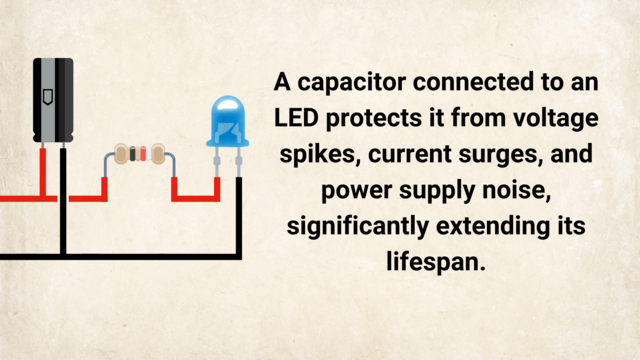
What is a Capacitor?
A capacitor is an electronic component that stores electrical energy in an electric field. You can think of it like a tiny rechargeable battery, but it charges and discharges much faster and can’t hold energy for very long.
- #2490
- 11 Sep 2025
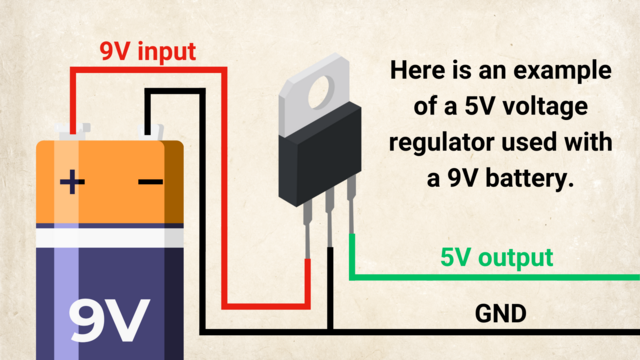
Voltage regulator
Why Are Voltage Regulators Important?
They protect components from getting too much or too little voltage.
They keep the power supply stable.
They make electronic devices more reliable and last longer.
- #2489
- 11 Sep 2025