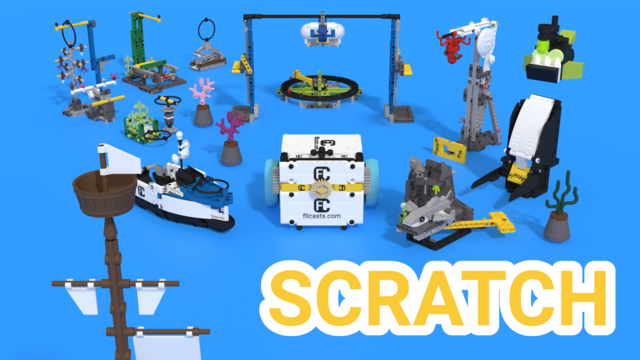
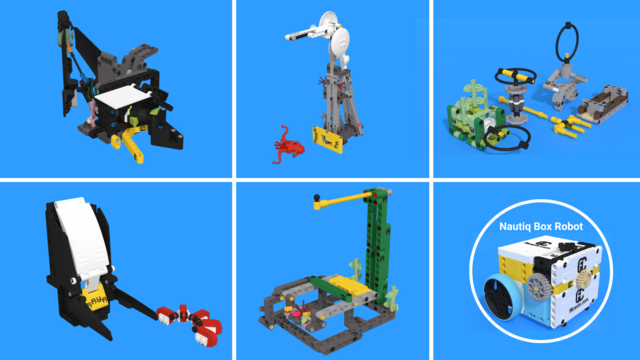
In this video tutorial, we do a 10 out of 10 for a complex run where we have to start with the robot on one side of the field, accomplish several missions, different types of missions, and deliver the robot to the other side of the field. So first we move, we collect the coral reef, the krill,
we collect some of the loops that are on the field, and we bring them. We deliver a monster. So we collect, and we deliver. We push.
We also collect an additional loop, but in a different way. So it's a complex run with several missions that we want to accomplish. And we'll try to do a 10 out of 10 to see how consistent and reliable the robot is.
For this, we are using the Nautiq box robot with two attachments: one on the front and one on the back. With these two attachments, we think we can accomplish all of these missions. And we can do it consistently and reliably. Let's see, 10 out of 10.
We go, then collect. We collect again. We move, we deliver, we push. We take a loop.
We collect again.
An almost perfect execution of this mission. Let's talk strategy. So, we discussed how we accomplished some of the missions, like all of the missions in the previous video in the tutorial. But now let's see the strategy here. When we are working with fields that have a base on the east and a base on the west, it's always a good tool to move the robot from one base to the other and accomplish several missions while moving.
Now, can you accomplish all of them? Well, we've prepared a run with a robot that tries to accomplish two missions more while it is moving. The issue here is timing. And the balance lies in timing and complexity. This robot, it's almost like at the maximum of the complexity that it could handle for this time frame. So, it could get a little bit more complex, but then the consistency and the reliability will get down. Here we've stopped at like, 1, 2, 3, 4, 5, 6, 7 missions. And these seven missions, or like seven executions, and all of these seven things are accomplished, like 10 out of 10. So the monster is dropped, the loops are connected. It's all strategy. It's how consistent and reliable the robot is. A couple of notes. We have a big container at the front of the robot. So with this big container, we can collect a lot of things. When we're moving from one side of the field to the other side of the field, and there are parts that could be collected, we can think of ways and a strategy to kind of group all of the collection in this run. Here, we've built this big container at the front of the robot,
and then we move forward.
We arrive at the other part of the field with almost all the parts inside of the container.
Let's measure the time and see how long it will take.
It started now.
It's like 10 seconds, and we are already here. We drop the monster, we collect the loop.
25 seconds. 25 seconds to move from one side of the field, the other side of the field and accomplish all of the missions. Not all the missions like parts of a few of the missions, but we do like seven actions while moving, and it takes 25 seconds. One thing that you can notice from this is that when we are losing time
in the competition, we lose time when we change the attachments. This is when we lose time. When we run the robot, we don't usually lose that much time because it takes 25 seconds to accomplish so many missions and to move from one side of the field to the other. What we should focus on when we are preparing for the competition is: can we build attachments that are easier to put on the robot, to remove from the robot so that we have a faster execution of the whole run.
The other interesting thing about this robot is that we manage to get from one side of the field to the other without aligning to any lines,
without following any lines. So, it's possible to do it. It's just, it really depends on the robot. And we have like a couple of robots while recording, and some of them were more consistent for the whole run than others.
I will leave you for the next two minutes to see the last two or three runs for this robot. I think I've discussed enough about it. I hope this is helpful, and I'll see you in the next tutorial.