The hall effect sensor can't detect a magnet, without there being one in the first place. While we can use glue or other ways of attaching a magnet to the clock face, we decided to use a second magnet on the other side of the face to hold the main one attached to it.

Courses and lessons with this Tutorial
This Tutorial is used in the following courses and lessons
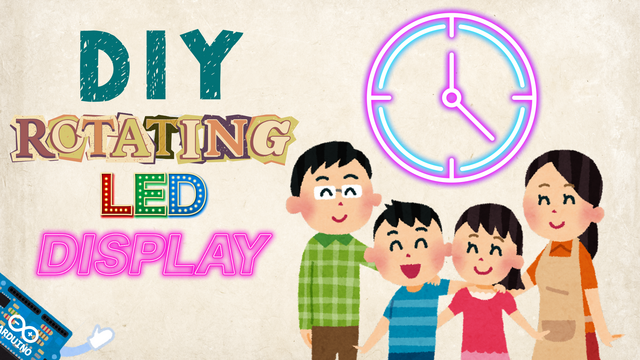

Build a DIY Rotating LED Clock Display – For Parents and Kids (Online and Self-Guided)
Discover the fun of DIY electronics with your child in this self-paced, beginner-friendly online course, where parents and kids work together to build a rotating LED strip display!
Designed for those with no prior experience, this project-based course walks you through the entire process of assembling a spinning LED display that uses persistence of vision to create a glowing clock.
- 60
- 0:00
- 56


Tip the Balance – Mounting the LED Arm
Balancing Act

The goal of this lesson is to attach the LED circuit PCB to the motor at its center of mass to minimize vibrations while it spins. This is the final lesson where we’ll work on the hardware of your rotating LED display!
- 7
- 2
- 7
- 3d_rotation 0