
FIRST LEGO League 2026-2027 BIOGLOW Future Edition preparation
Get ready for the FIRST LEGO League 2026-2027 BIOGLOW Future Edition season with free detailed 3D building instructions for all mission models.
- 0:00
- 0
Get ready for the FIRST LEGO League 2026-2027 BIOGLOW Future Edition season with free detailed 3D building instructions for all mission models.
Get ready for the FIRST LEGO League 2026-2027 BIOGLOW season with free detailed 3D building instructions for all mission models.
You'll also discover expert tips and tricks - including references to previous competitions - to inspire creative, effective ways to approach and complete the missions.
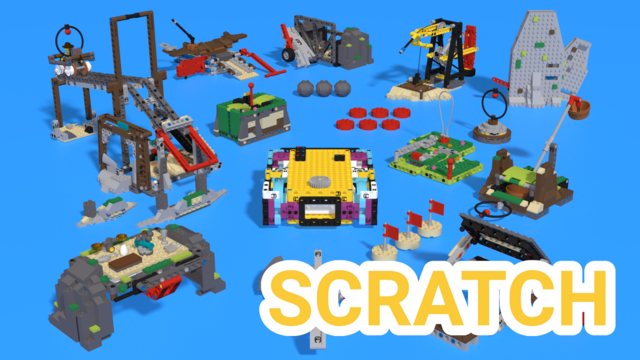
The FIRST LEGO League 2025-2026 UNEARTHED competition challenges teams to recover artifacts, work around delicate structures, and complete several actions efficiently. This course explores practical solutions using the compact Smaller Pancake box robot.
You’ll study a variety of mission strategies and attachment designs, including active and passive mechanisms, gears, hooks, rubber bands, gravity-powered actions, and alignment techniques. The tutorials explain not only what the robot does, but also why each design and programming decision improves the run.
Each main tutorial is paired with a 10 out of 10 reliability test, showing how consistently the solution performs and how details such as starting position, tire grip, attachment preparation, and mission-model movement can affect the result.
To support fair play, our complete mission solutions are published only after the season has ended. Before starting the course, we recommend reviewing the FIRST LEGO League robot game guide.

Get ready for the FIRST LEGO League 2025-2026 UNEARTHED season with free detailed 3D building instructions for all mission models.
You'll also discover expert tips and tricks—including references to previous competitions—to inspire creative, effective ways to approach and complete the missions.
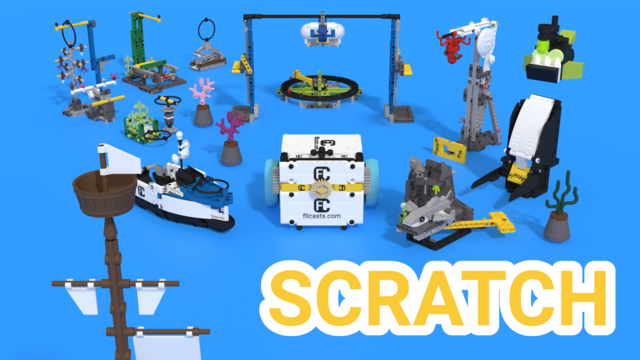
Ready to dive deep into the 2024-2025 FIRST LEGO League SUBMERGED season? In this hands-on course, we showcase and explain a series of expertly crafted example solutions using the versatile Nautiq box robot and powerful custom-built attachments.
Unlike others, we release our solutions only after the season ends, ensuring fair play while providing full transparency. What sets this course apart is our strong focus on multi-mission runs - watch and learn how to complete 3, 4, or even 5 missions in a single program. Then, we break everything down mission by mission so you can replicate, tweak, and fully understand the strategies and logic behind each run.
This course is more than a demonstration - it's a teaching tool. Whether you're a student eager to master robotics or a coach looking to elevate your team's performance, you'll gain practical insights into how to score more points efficiently and creatively in FLL competitions.
And with the Nautiq, the fun is just getting started! You’ll explore the power of gears, the magic of attachments, and the surprising capabilities of a compact robot that packs a serious punch. Get inspired, get building, and bring your FLL journey to the next level!
Before starting this course, we recommend reviewing the FIRST LEGO League robot game guide.

In this course, we demonstrate and explain example solutions for the FIRST LEGO League 2023-2024 MASTERPIECE competition using the Chain Monster box robot as a base, with custom-built attachments. Each solution is powered by a Python program that controls the robot to accomplish various missions efficiently. Every year, we share our solutions and insights only after the season is over.
The course is unique in its focus on multiple missions in a single run, showcasing runs that complete 3, 4, and even 5 missions in succession. We not only analyze these runs but also dive into the details of each individual mission, explaining the programming logic behind them. By following this course, you’ll gain a deeper understanding of how Python is used to automate mission execution and optimize your team's performance in FLL competitions.
Before starting this course, we recommend reviewing the FIRST LEGO League robot game guide.

In this course, we demonstrate and explain example solutions for the FIRST LEGO League 2023-2024 MASTERPIECE competition using the MiniBox box robot as a base, with custom-built attachments. Each solution is powered by a Python program that controls the robot to accomplish various missions efficiently. Every year, we share our solutions and insights only after the season is over.
The course is unique in its focus on multi-mission runs, showcasing runs that accomplish 3, 4, and even 5 and 6 missions. We then dive into the details of each specific mission. As you follow the course, try replicating the solutions to better understand the programs and explanations. This approach teaches students and teachers the principles of accomplishing missions in FLL robotics competitions and how to help your team score more points. Moreover, with the MiniBox, you will definitely have fun leaving the attachments on the mat. That will save you some precious time preparing for the next run!
Before starting this course, we recommend reviewing the FIRST LEGO League robot game guide.
In this course, we demonstrate and explain example solutions for the FIRST LEGO League 2023-2024 MASTERPIECE competition using the MiniBox box robot as a base, with custom-built attachments. Every year, we share our solutions and insights only after the season is over. The course is unique in its focus on multi-mission runs, showcasing runs that accomplish 3, 4, and even 5 and 6 missions. We then dive into the details of each specific mission. As you follow the course, try replicating the solutions to better understand the programs and explanations. This approach teaches students and teachers the principles of accomplishing missions in FLL robotics competitions and how to help your team score more points. Moreover, with the MiniBox, you will definitely have fun leaving the attachments on the mat. That will save you some precious time preparing for the next run!
Before starting this course, we recommend reviewing the FIRST LEGO League robot game guide.

In this course, we demonstrate and explain example solutions for the FIRST LEGO League 2023-2024 MASTERPIECE competition using the Chain Monster box robot as a base, with custom-built attachments. Every year, we share our solutions and insights only after the season is over. The course is unique in its focus on multiple missions in a single run, showcasing runs that accomplish 3, 4, and even 5 missions. We then dive into the details of each specific mission. As you follow the course, try replicating the solutions to better understand the programs and explanations. This approach teaches students and teachers the principles of accomplishing missions in FLL robotics competitions and how to help your team score more points.
Before starting this course, we recommend reviewing the FIRST LEGO League robot game guide.

In this course, we demonstrate and explain example solutions for the FIRST LEGO League 2022-2023 SUPER POWERED competition using the Kriket box robot as a base and building attachments for it. Every year, we share our solutions and our comments only after the season is over. The course is centred around MULTIPLE MISSIONS in a single run which is unique. We see runs with 3, 4 and even 5 missions. Then we enter into details around accomplishing the specific missions. You can follow the course, and as you go through each mission, try to replicate the solutions to understand the programs and explanations. This teaches students and teachers the principles of accomplishing missions in every FLL robotics competition and how to help your team score more points.
Before starting this course, we suggest you go through the FIRST LEGO League robot game guide
There is an additional course that does a review for the same competition but with a different robot - the Chain Monster. It present other principles of building attachments and shows different examples. Check out the other course also. FIRST LEGO League 2022-2023 Super Powered solutions and review with Chain Monster box robot from LEGO Education SPIKE Prime

The goal of this course is to help teachers, mentors and teams with a week by week schedule of how they could approach the FLL season if they have about 16 weeks, each week one class of 45 minutes. This course is complimentary to the already existing structure of Prepare for FIRST LEGO League Robot Game. The complete guide. The course gives an example of a structure based on weeks and classes.
The course also makes a few suggestions about the innovation project and how it could be approached.
This course is in the development.

In this course, we demonstrate and explain example solutions for the FIRST LEGO League 2022-2023 Super Powered competition. Every year, we share our solutions and our comments only after the season is over. The course is centred around MULTIPLE MISSIONS in a single run which is unique. We see runs with 3, 4 and even 5 missions. Then we enter into details around accomplishing the specific missions. You can follow the course, and as you go through each mission, try to replicate the solutions to understand the programs and explanations. This teaches students and teachers the principles of accomplishing missions in every FLL robotics competition and how to help your team score more points.
Before starting this course, we suggest you go through the FIRST LEGO League robot game guide
There is an additional course that does a review for the same competition but with a different robot - the Kriket box robots. It presents other principles of building attachments and shows different examples. Check it out! FIRST LEGO League 2022-2023 SUPERPOWERED solutions and review with Kriket Box robot from LEGO Education SPIKE Prime

Very often we need additional parts to build more complex attachments to increase our chance of winning the competition. These are parts outside of the LEGO Education SPIKE and LEGO Mindstorms sets. That is why, most teams decide to purchase parts that are not included in the official sets.
The FLLCasts team have prepared a list of recommended additional parts each team should have in order to be more successful. Of course, you can decide whether to buy more or less of each item depending on your budget.
Parts could often be found on bricklink.com and rebrickable.com
In the following course we would focus on the type of the recommended parts, share a list of them and publish tutorials on how these parts could be used to accomplish different missions. Our goal is to answer the questions "What could be done with LEGO?", "What parts are available 'out there'?
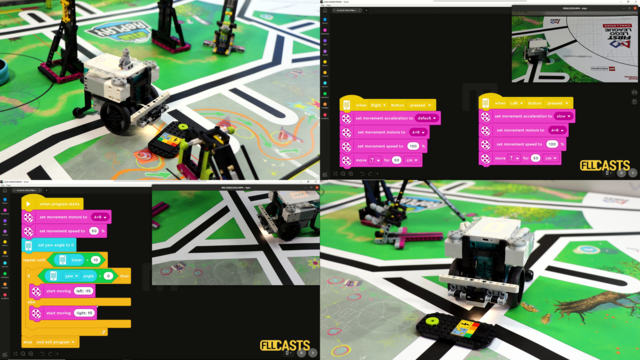
To successfully advance at competitions we need to understand two concepts - how to reliably and consistently navigate the field and position the robot exactly where we need it to be on every run, and how to build attachments that would accomplish a mission model once we have reached it. This course is focused on the first part. The second part is the whole FLLCasts platform, but start at FIRST LEGO League with LEGO Mindstorms Robot Inventor. "Challenge" competition for 9-16 years old.
The goal of this course is to help you learn to program LEGO Robots using Scratch and make them behave consistently and reliably during competitions. As a language we use LEGO MINDSTORMS App Word Blocks which is based on Scratch. We look at a lot of concepts that could be used for FIRST LEGO League and World Robot Olympiad competitions - for example, how to follow a line fast, slow, in a smooth way, with 5 states. Also, how to align to lines, how to do double align, how to keep a straight line with a motion sensor.
Unfortunately, LEGO discontinued the robot series during the making of this course which is why it's kind of shortish. You could use the SPIKE Prime course for a more in-depth analysis.
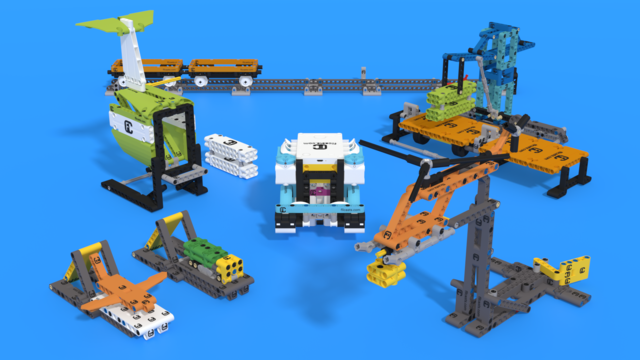
In this course, we demonstrate and explain example solutions for the FIRST LEGO League 2021-2022 Cargo Connect competition. Just like every year, we share solutions only after the season is over. In this course, you will find examples and principles of building attachments and will learn how to program consistent and reliable robots for each mission. You can follow the course, and as you go through each mission, try to replicate the solutions to understand the programs and explanations. Upon completion of the course, you will have many new ideas about how to approach the missions in every FLL robotics competition and how to help your team score more points.
Before starting this course, we suggest you go through the FIRST LEGO League robot game guide
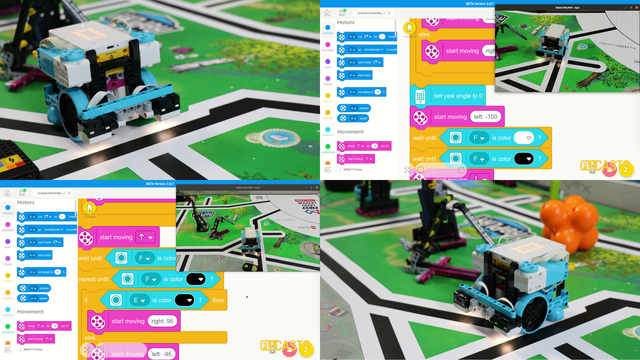
Two fundamental concepts are essential for robotics competitions: ensuring the robot consistently navigates and positions itself accurately on the field and designing attachments that complete missions once the robot reaches its target. This course focuses on the first aspect - precise navigation and positioning - while the second is covered across the entire FLLCasts platform, starting with the FIRST LEGO League with LEGO Education SPIKE Prime. "Challenge" competition for 9-16 years old
The goal of this course is to help you learn how to program LEGO Education SPIKE Prime robots to operate consistently and reliably in competition settings. We use LEGO Education SPIKE App Word Blocks, a Scratch-based programming language, to teach key techniques applicable to FIRST LEGO League and World Robot Olympiad competitions. Topics covered include different methods for line following, such as fast, slow, smooth, and using multiple states, as well as techniques for line alignment, double alignment, and maintaining a straight path using the motion sensor.
We have updated the programs from LEGO Education SPIKE App 2 to LEGO Education SPIKE App 3.5.1, so you might see inconsistencies between the tutorials and the programs. They are mostly visual, and the programs function as intended.

The goal of this course is to take you through some of the most useful principles for building and using attachments to accomplish missions at FIRST LEGO League competitions. The whole course is based on a LEGO MINDSTORMS Robot Inventor and you need a single 51515 set and without additional parts (you will need a second color sensor for the lessons for using two color sensors, but feel free to skip them if you don't have it). For every mission there is a Scratch and Python program attachment. The course consists of 25 lessons suitable for beginner and advanced students. Every lesson consists of a video tutorial demonstrating the principle and how the mission could be accomplished along with building instructions for the robot, the attachment and programs for controlling the robot.

This course presents Solutions and Review of the FIRST LEGO League 2021 RePlay competition and it uses LEGO Mindstorms Robot Inventor as a base. It is a mirror course to the LEGO Education SPIKE course for the same competition. For each mission in the competition the course contains the rules for the mission, a tutorial how to accomplish it, instructions for the robot that is used and instructions for the attachment that is used. Every lesson also contains a Scratch and a Python program for accomplishing the mission and of course a 10 out of 10 tutorial that demonstrated how reliable the approach is. Upon completion of the course you will have many new ideas about how to approach mission on every FLL robotics competition and how to help your team score more points.
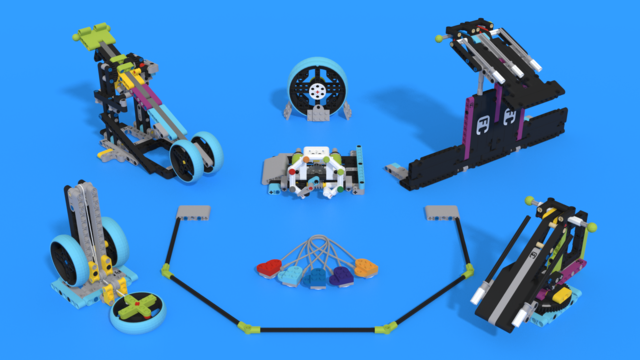
This course presents Solutions and Review of the FIRST LEGO League 2020-2021 RePlay competition. We do such a course every year after the competition. By moving through the course lessons, building the robot and attachment and completing the missions you will learn how to achieve FLL mission following good engineering principles for building robots, attachments and developing programs. Upon completion of the course you will have many new ideas about how to approach mission on every FLL robotics competition and how to help your team score more points.

This is the most detailed course we've ever created on preparing for a FIRST LEGO League robotics competition. It focuses on using LEGO Education SPIKE Prime to build a simple Box Robot. The course includes 25 lessons, making it suitable for both beginners and advanced students. It builds on over 10 years of experience providing example solutions and explanations for FIRST LEGO League robotics competitions.
This course is one of the popular courses in the FIRST LEGO League Robot Game. The Complete Guide. We highly recommend checking out the full guide!
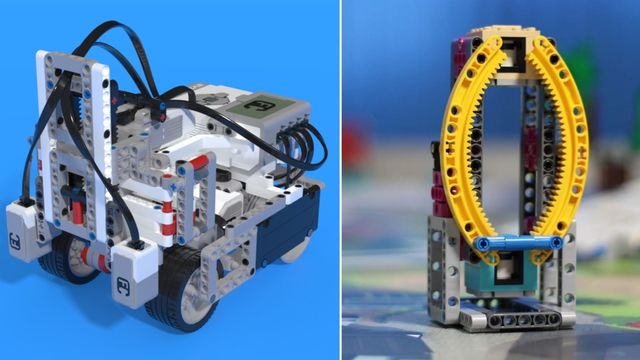
You probably know that every year we're releasing a Solutions and Review course for the missions of FIRST LEGO League competitions challenges. This year the situation with the competition is a bit different, but here we are - sitting here, acting kinda normal, figuring out what robot should we build to accomplish every mission 10 times in a row.

Our goal with this course is to do a recap of FIRST LEGO League 2018-2019 Into Orbit competition. We'll show different solutions for some of the missions along with discussion on the approaches. We hope that a recap like this could help team prepare for next year. With available building instructions, ready to use programs this course is perfect for exercise on the missions from the competition.

The FLL season is great, but has one disadvantage - it ends. We have prepared that course for those of you that does not want to stop! The course presents a whole new challenge with custom designed field and mission models, that can be built from just 2 LEGO Mindstorms EV3 sets (core+resource). It is a great way to keep the momentum going after the end of the FLL season and prepare in the best way possible for the next.

After the great success of the previous two Box Robots Courses (Box Robot 1 and Box Robot 2) we are improving the construction even further showing one more way to build Box Robots and to resolve some of the challenges that we all had with the previous robots.
Of course attachments are a great topic of the robots. We show the general way in which one is to build attachments with the Knob Wheels and Gear Wheels mechanisms.
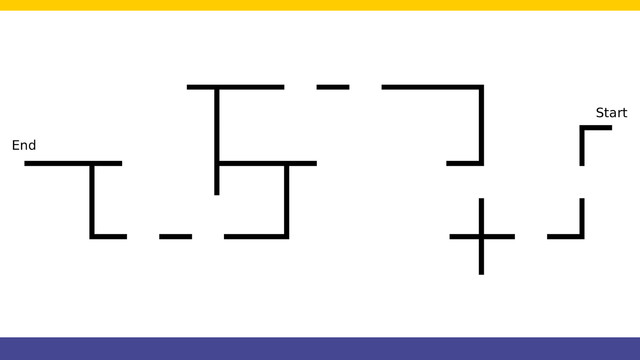
There comes a time when you need to program the robot to "follow a line, but if another sensor detects something you would like to stop, do some work, and then continue following the line". This is applicable to competition robots as it is applicable to real-life robots.
There comes the State Machine Pattern. An advanced and very powerful concept that allows you to easily implement complex robot behaviours with a simple, well-organized, extensible, bug-free program where the robot could be in 1,2, 10 or 100 states and you will still be able to manage the complexity of the world around the robot.

In this course, we would like to introduce you to multi-purpose attachments. These are attachments designed to accomplish a number of missions when the robot goes out of the base in the FIRST LEGO League competitions.
You've all seen them. They are kind of large, powered by a few motors and sometimes use rubber bands, levers and other mechanisms.
Use the course as a preseason preparation and try to solve the tasks to prepare for next year competition. Even if you don't have the field, build the attachments and follow the tasks to inspect their behaviour. Modify them as needed when said.
This is the first draft of the course including only the attachments in different sections. If you are interested in learning more please enrol in the course and in the next few weeks we would try to record the video tutorials.
