Electronics
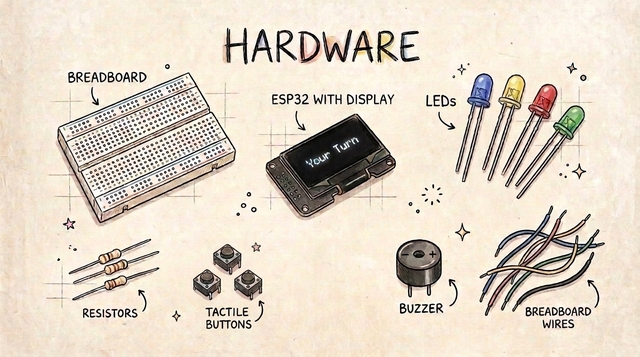


The Hardware
In this lesson, you'll build the electronic circuit for a memory game that challenges players to remember and repeat sequences of lights and sounds.
As you build the circuit, you'll learn:
Breadboards: How to connect electronic components without soldering.
Resistors: How they control the flow of current and protect components.
LEDs: How they work and how to connect them correctly.
Buttons: How they allow players to interact with the circuit.
Buzzers: How they produce sound.
You'll assemble the circuit step by step, using short instructional videos that demonstrate how to complete each task. By the end of this lesson, you'll have the complete hardware setup for your memory game.
In the next lesson, you'll learn how to upload code to the ESP32 and play the game you've built. For now, the focus is on understanding the components and connecting everything correctly.
- #2706
- 20 Oct 2026
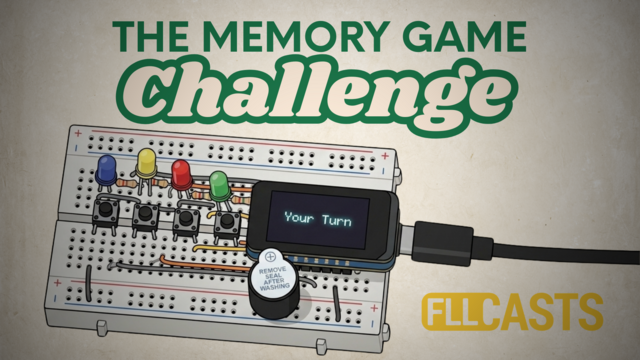
The memory game challenge
In this self-paced, beginner-friendly online course, you will learn how to create a memory testing game. And don’t worry if you’ve never wired a circuit or touched an ESP32 before. We guide you from the very first step all the way to powering on your finished game.
By the end of this journey, you’ll both have learned how to read resistor color codes and work with common electronic components - all while building something that looks impressively “advanced” but is totally achievable for beginners.
Before you jump into the build videos, this first lesson gives you a clear picture of what you're creating - and what materials you’ll need to make it happen. We want you to have full confidence in what you’re investing in. There are no surprise expenses later: everything required is listed upfront, along with tips on where to buy each part.
- #2708
- 20 Oct 2026
Components shopping list
Here’s a list of all the parts you need to build the table tennis scoreboard. Each part links to Amazon. If a link doesn’t work, don’t worry - we’ve also added tips on how to find a replacement.

- #2709
- 21 Oct 2026
SPI Communication
SPI (Serial Peripheral Interface) is a communication method that allows electronic devices to exchange information quickly.
In this lesson, you will learn how SPI works, what wires it uses, and why it is useful. People commonly use SPI to connect microcontrollers to sensors, displays, and memory modules.
- #2710
- 21 Oct 2026
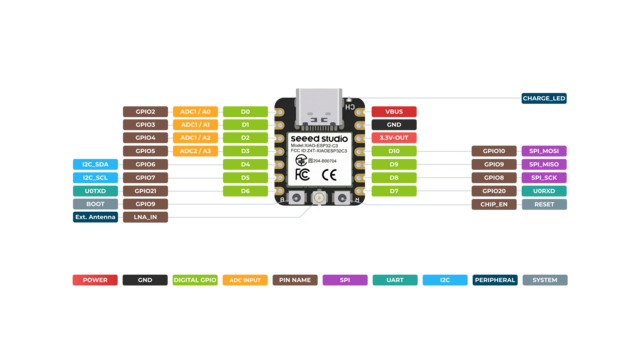
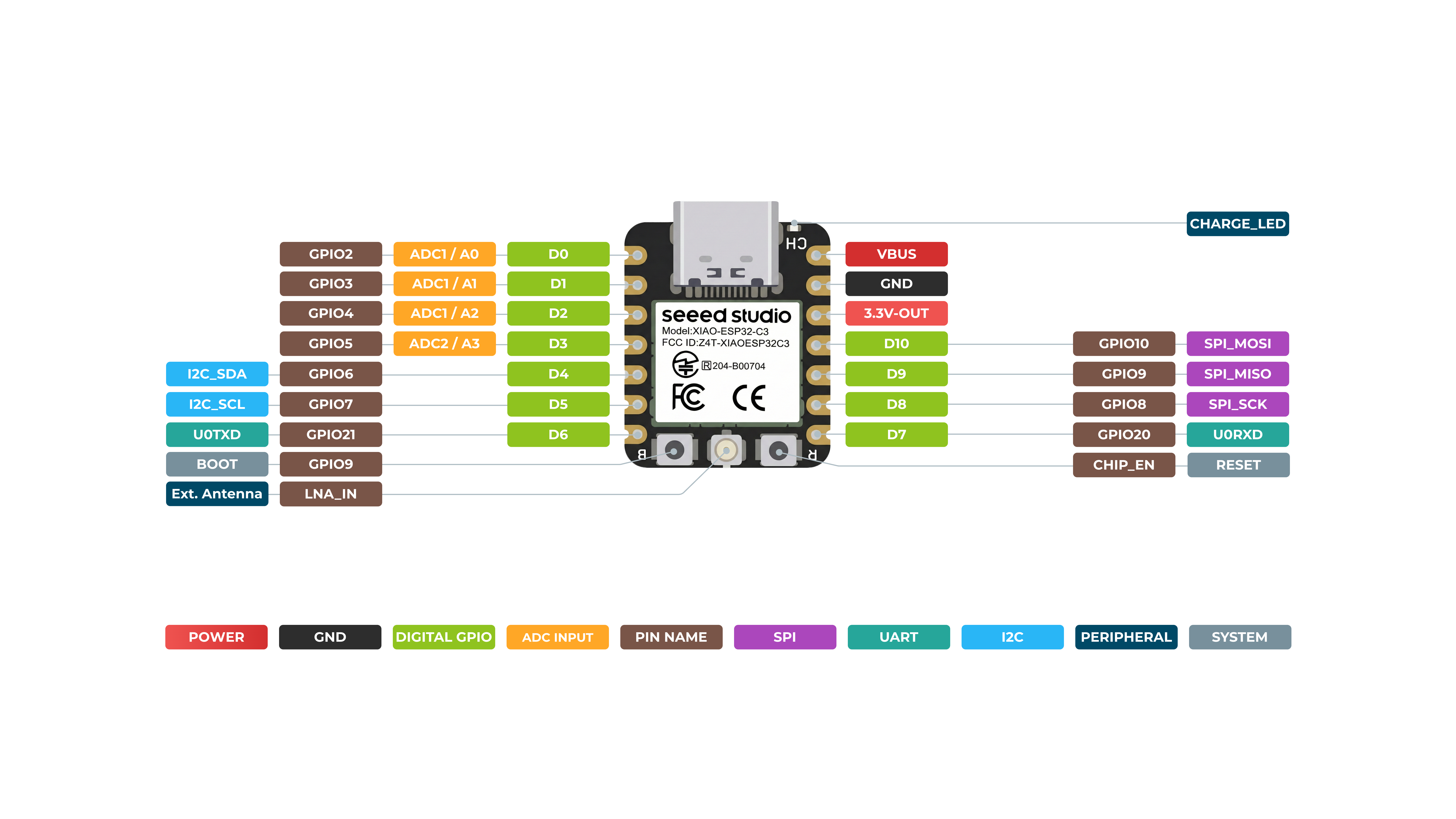
Seeed Studio XIAO ESP32C3 pinout
The Seeed Studio XIAO ESP32C3 is a tiny programmable computer. It can switch on lights, listen to sensors, control gadgets, and even communicate using Wi-Fi and Bluetooth.
In this tutorial, we will go over its pins and what they do.
- #2711
- 21 Oct 2026