Video tutorials
Filters:



Attachments for Box Robot for Robotics Competitions. Transfer power from the motors
In this video we discuss how do we transfer power from the motors that are "inside the robot box" to the gear wheels that are "outside the robot box".
- #289
- 12 Sep 2016

The LED clock End Goal
In this self-paced, beginner-friendly online course, you and your child will learn how to create a rotating LED strip display—a glowing clock that seems to paint time in mid-air. And don’t worry if you’ve never soldered, wired a circuit, or touched an Arduino before. We guide you from the very first step all the way to powering on your finished display.
By the end of this journey, you’ll both have learned real hands-on skills—like how to solder, drill clean mounting holes, read resistor color codes, and work with common electronic components—all while building something that looks impressively “advanced” but is totally achievable for beginners.
Before you jump into the build videos, this first lesson gives you a clear picture of what you're creating—and what materials you’ll need to make it happen. We want you to have full confidence in what you’re investing in. There are no surprise expenses later: everything required is listed upfront, along with tips on where to buy each part.
- #2559
- 19 Nov 2025

Attachments for Box Robot for Robotics Competitions. Active Attachment at the top of the Robot
This is the first Active Pinless Attachment for the Box competition robot. The attachment is placed on the top of the robot and is controlled by one of the motors.
- #292
- 02 Oct 2016
Completing the clock hardware - part 6
The hall effect sensor can't detect a magnet, without there being one in the first place. While we can use glue or other ways of attaching a magnet to the clock face, we decided to use a second magnet on the other side of the face to hold the main one attached to it.
- #2554
- 10 Nov 2025

Robot Design Ideas for Chassis with Mindstorms EV3. Base Chassis 4
Probably the robot I like the most from this series of five robots. See the video to understand why and what is interesting and special about this robot.
- #186
- 14 Feb 2016
Completing the clock hardware - part 5
Make sure the connection between the clock arm and the clock's body is strong. Otherwise, it may sleep when you turn it on.
- #2553
- 10 Nov 2025

Quick Pinless Attachments for LEGO EV3 Competition Robots (Part 1)
You think that you can quickly change the attachments of your LEGO Mindstorms EV3 competition robot? Are you sure? In this first episode of the series you will see how to create and attach attachments without using pins and how faster and easier this could be. You will see the design logic of a few attachments and how they work on the field.
- #63
- 30 Nov 2014
Completing the clock hardware - part 4
The 330 Ω resistor on the LED strip’s data pin acts like a tiny speed bump for the signal. It protects the LEDs by keeping the data signal from being too strong or too fast, which helps the strip work correctly and last longer.
- #2552
- 10 Nov 2025

Attachments for Box Robot for Robotics Competitions. Lifting heavy elements with an Active Attachment
One more example for an active attachment with a system of gear wheels. This time the system is constructed so that the attachment could lift heavy objects.
- #295
- 23 Oct 2016
Completing the clock hardware - part 3
The ground connection to the LED strip can be connected to any ground connection of this circuit. There is no danger of anything burning.
- #2551
- 10 Nov 2025

Attachments for Box Robot for Robotics Competitions. Passive attachments
Without the use of any motor, you can still accomplish a number of missions using passive attachments. You can still pull/push on different levers using only a beam or two connected to the frame.
- #291
- 25 Sep 2016
Completing the clock hardware - part 2
Be careful with the power connection of the LED strip. If you connect it to the 9V battery line, it will fry the LED, and the strip will be ruined.
- #2550
- 10 Nov 2025

EV3 basics course. Gyro Sensor. Turn at an angle (part 1)
The Gyro sensor in LEGO Mindstorms EV3 sets is new for the sets and we answer basic questions about its usage. The sensor detect when the whole constructions turns at a particular angle, but there are a number of gotchas in using it.
- #154
- 01 Jan 2017
Completing the clock hardware - part 1
Measuring the center of mass of the arrow arm, in its unfinished form, will be inaccurate, but we can come closer to being accurate if we place as many of the components on it before making our guess.
- #2549
- 10 Nov 2025

Зъбни колела. Въведение. (част 1)
Зъбните колела могат да бъдат силен инструмент в ръцета на този, който знае как да ги използва. В този материал ще се запознаем с основни определения и понятия , свързани със зъбните колела.
- #54
- 26 Sep 2014
Attaching the Hall effect sensor - part 2
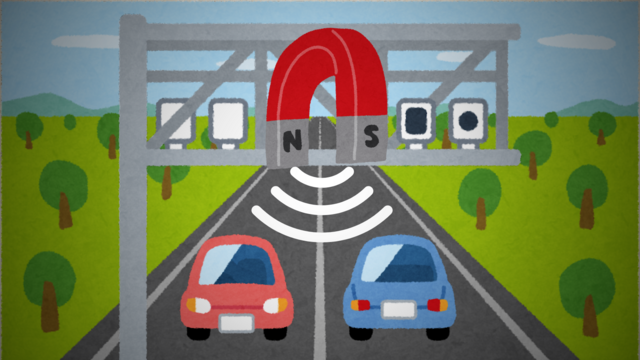
A pull-down resistor keeps the Hall sensor’s signal at zero when no magnet is near. Without it, the sensor could get confused and give random on/off signals. It makes sure the circuit can clearly tell when a magnet is present or not.
- #2548
- 10 Nov 2025

EV3 basics course. Gyro Sensor. Tasks (part 5)
Tasks for the Gyro sensor that you can use in STEM classes, while preparing for a competition or just to explore how the sensor works.
- #158
- 01 Jan 2017
Attaching the Hall effect sensor - part 1
A Hall effect sensor is basically a tiny magnet detector. When a magnet comes near it, the sensor can “feel” the magnetic field and tell the circuit, usually by turning its output on or off. We can use it to detect things moving, like wheels spinning or doors opening.
Some microcontroller pins can act like tiny batteries (power) or tiny paths to ground. By setting a pin HIGH, it gives a little voltage to power something. By setting it LOW, it acts like ground, letting current flow back. This is useful for testing or powering small sensors,
In short: Hall sensors feel magnets, and digital pins can sometimes act like tiny power sources or grounds to help run them.
- #2547
- 10 Nov 2025

How to build an EV3 LEGO Mindstorms Competition Robot Construction
In this episode, we introduce a LEGO Mindstorms EV3 version of competition robot construction. It is a modular construction, with medium motor for additional attachments and two light or colour sensors for orientating on the field.
- #58
- 03 Nov 2014

Mounting the LED strip - part 5
Some LED strips have a sticky backing covered by a thin plastic layer. You can peel it off and stick the strip directly. If your strip is different from the one we suggested in the shopping section, you might need to get a little creative.
- #2546
- 10 Nov 2025

How to move forward with LEGO Education SPIKE Prime
This tutorial in an animated demonstration of how a LEGO Education SPIKE Prime moves forward. To download the program check out the courses in which the tutorial is used.
- #1716
- 26 Apr 2021

Mounting the LED strip - part 4
While we can pass the cables around the PCB, we decided that it would look more appealing if they were to pass from underneath the PCB. While this is an easy way to do so, those more tech-savvy can solder 3 terminal blocks to the PCB, as a way to bypass the drilling task and create an easy way to replace the LED strip in the future.
- #2545
- 10 Nov 2025

EV3 basics course. Gyro Sensor. Why is the robot turning to a different angle (part 2)
Turning with the Gyro Sensor on a specified angle and stopping there have never been easy. It is not going to get any better. However, this is not a problem of the Gyro sensor. The problem is in the way we develop our programs.
- #155
- 01 Jan 2017
Mounting the LED strip - part 3
On our LED strip, there are two extra wires for power and ground. We don't need them, so we cut them off. There is also an extra connector on the remaining cables. As we will be soldering them to the board, we don't really need this connector, so we remove it as well.
- #2544
- 10 Nov 2025

Proportional Line Following with EV3 Mindstorms. Part 2
Continuing with the Proportional algorithm for following lines. Smooth and stable this is the first part of the PID.
- #176
- 01 Nov 2015